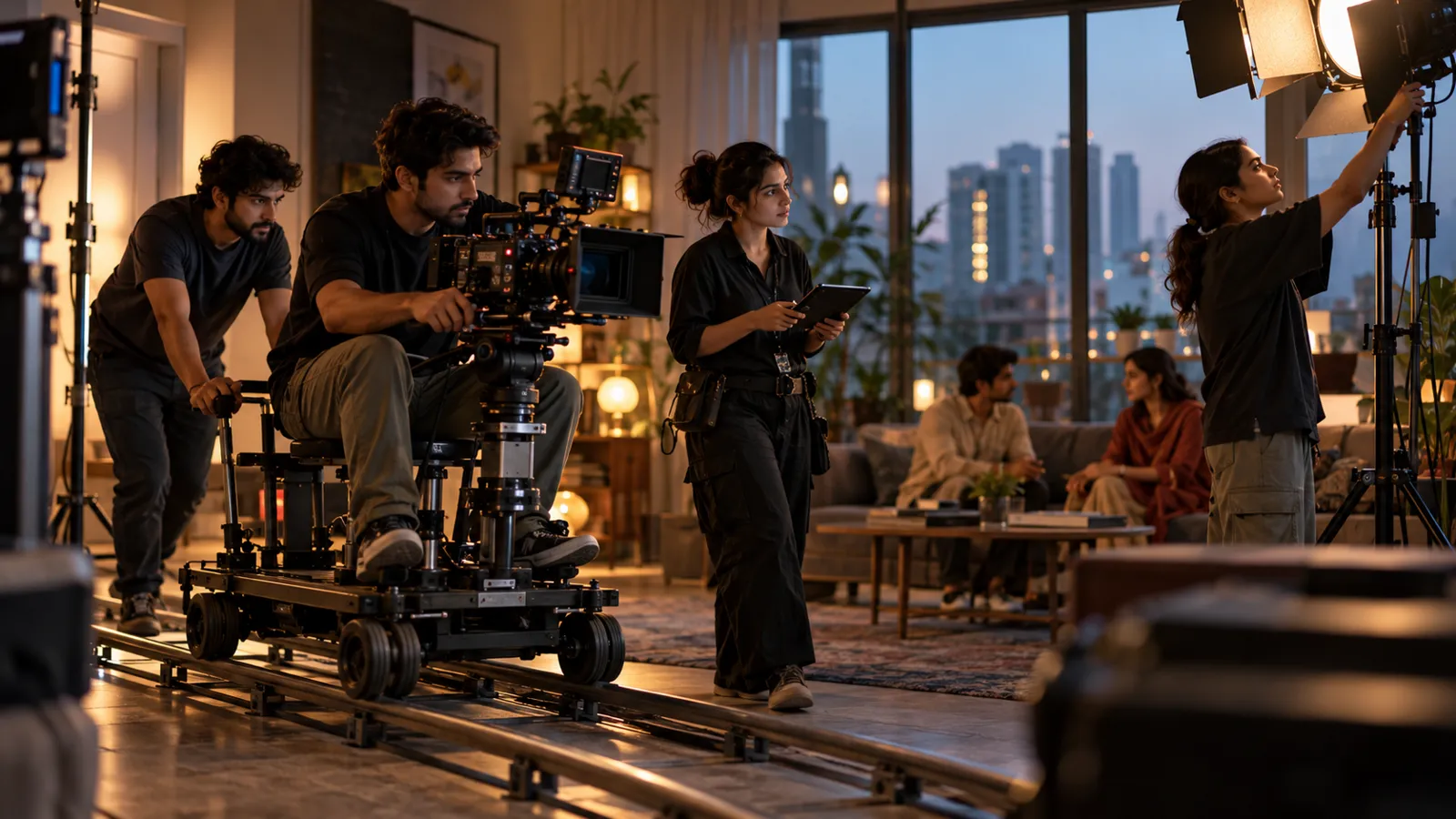
01 / The process / Preparation
Break down what the script requires
Read the script for more than plot. Identify people, places, props, wardrobe, sound conditions, time of day and any practical requirements that affect filming. A breakdown makes hidden dependencies visible: a scene may need a particular location at a particular hour, or a prop may need several consistent versions. The purpose is to discover these needs while there is still time to respond.
02 / The process / Preparation
Bring departments into the same conversation
A director’s intention, camera approach, sound plan and production schedule should support one another. A location visit can reveal access problems or opportunities that change the plan. Rehearsal, shot lists, floor plans and equipment tests can help resolve uncertainty. Documents should be detailed enough to guide the team and simple enough to remain useful when decisions change.
03 / The process / Preparation
Define readiness in practical terms
Before filming, the team should know who is responsible for each task, what permissions and arrangements are in place, and how changes will be communicated. Backup plans should address the most likely disruptions rather than every imagined possibility. L2H’s proposed production learning uses preparation as a creative tool: the better the shared understanding, the more attention can be given to performance, observation and thoughtful adaptation on the day.
An efficient preparation meeting ends with specific actions, responsible people and the next point of review. A document only helps when the team knows which version is current and what has changed since its last conversation.