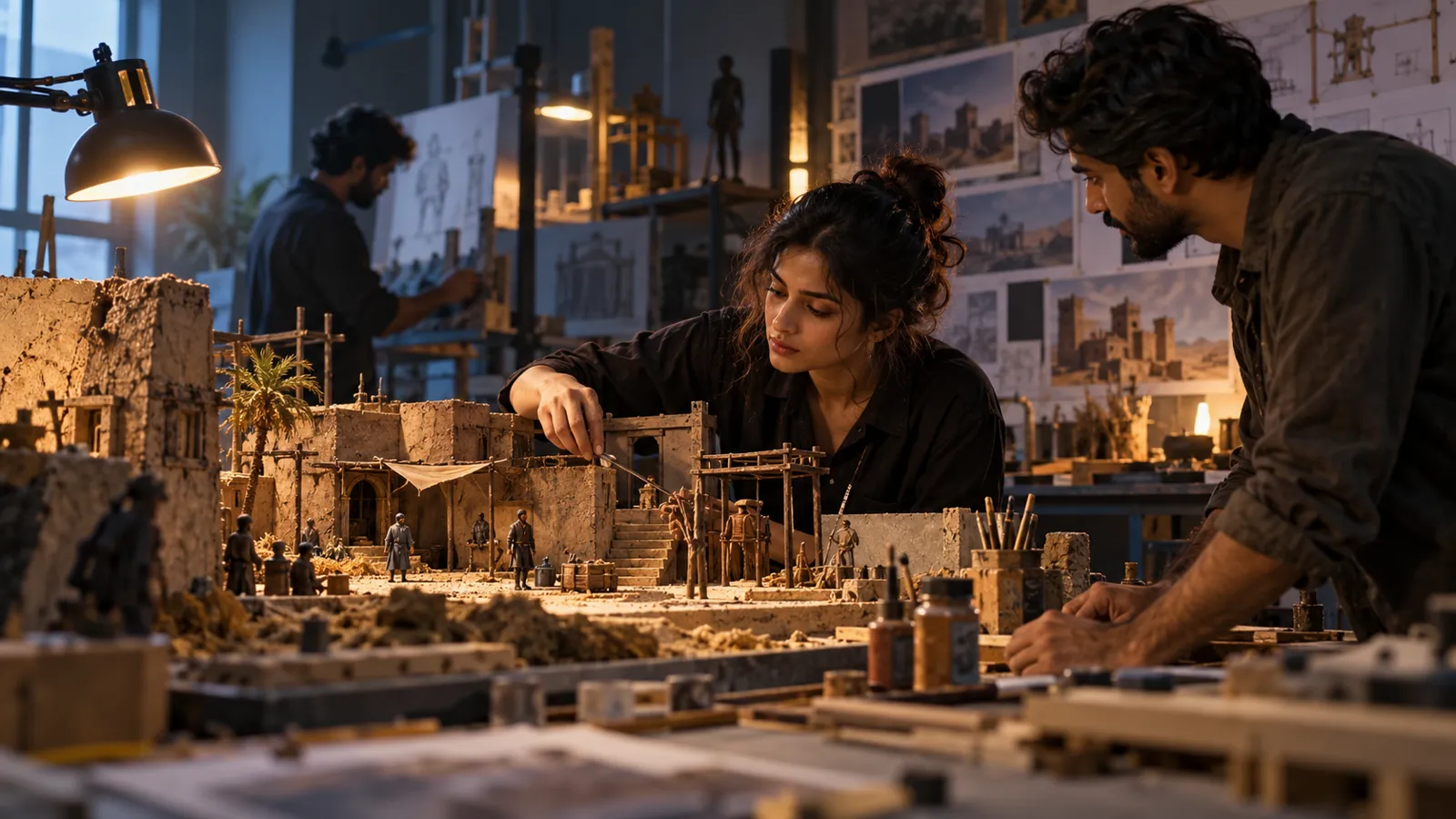
01 / The craft / Design
Read the environment through the character
A location is more than an attractive background. Ask who uses the space, what has changed there and which objects carry personal significance. The way something is arranged or worn can reveal routine, status and relationships. Research and observation help a designer choose details that feel lived in, while resisting the temptation to fill every part of the frame with information.
02 / The craft / Design
Work with the camera and the light
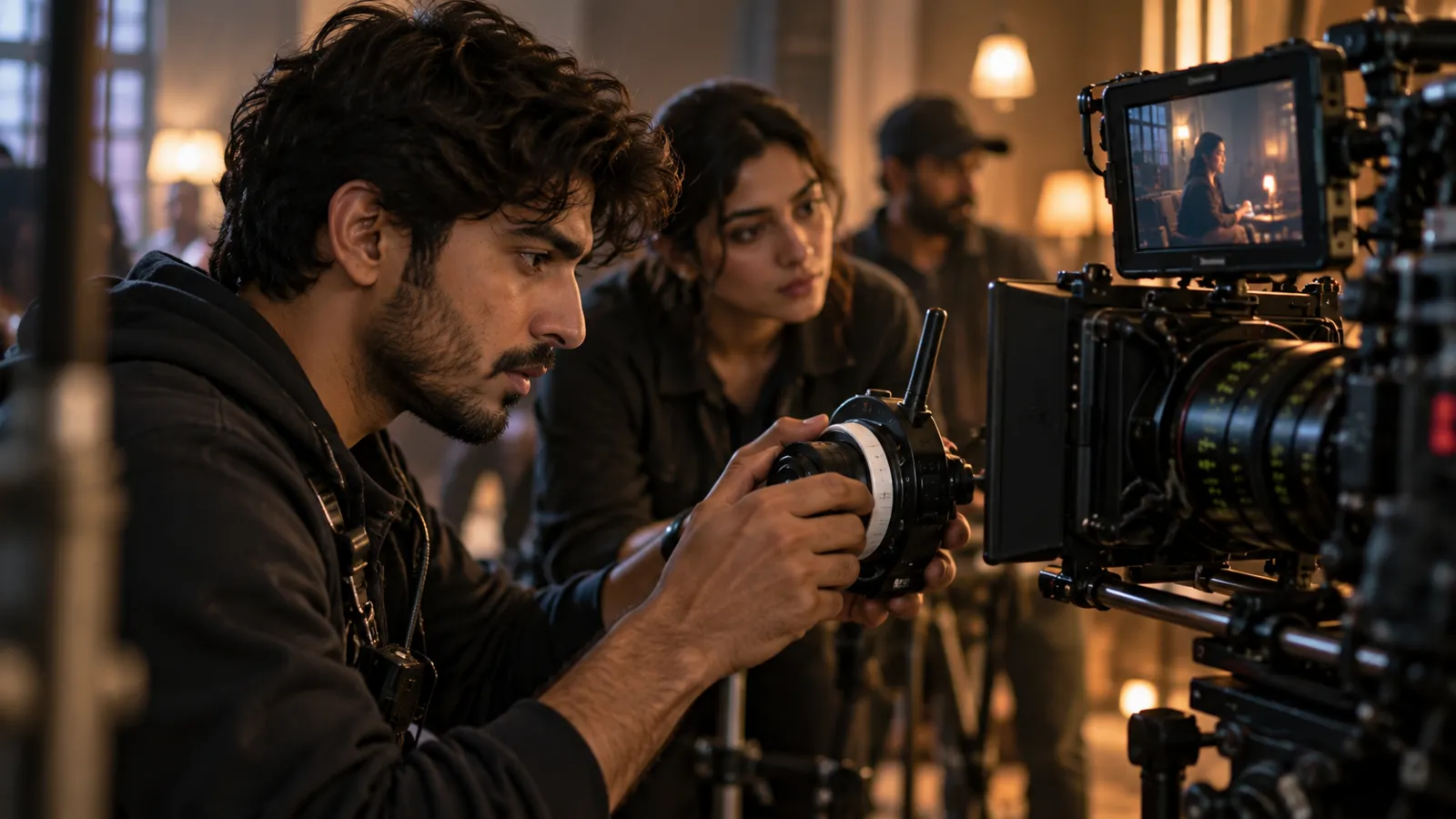
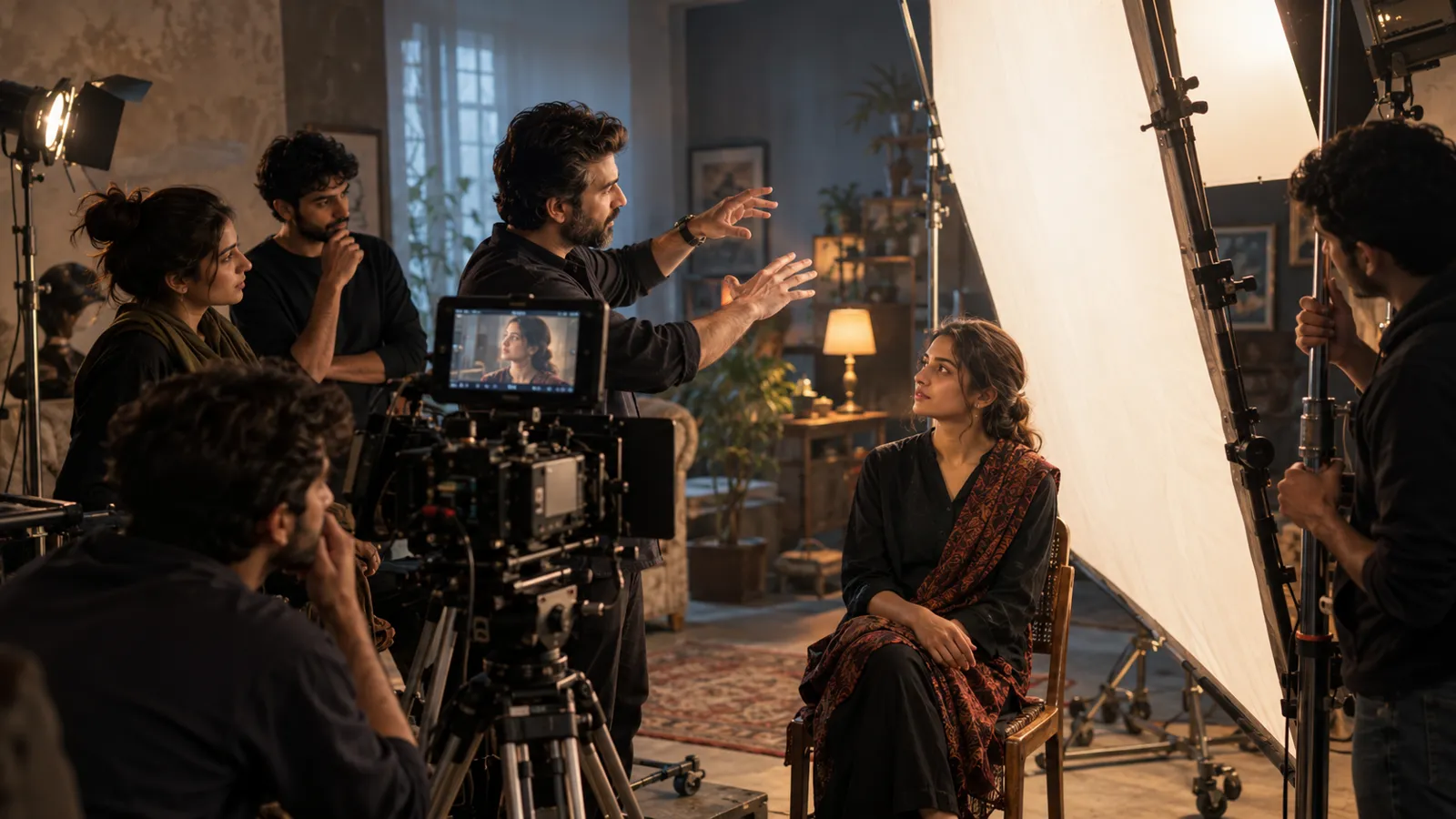
A design choice changes when framed, lit and placed beside a costume or face. Camera tests can reveal reflections, distracting patterns or color relationships that are difficult to predict from a moodboard alone. A practical exercise might dress one small space for two different characters, then compare how the same frame communicates their circumstances. The intention should remain legible without requiring an explanation.
03 / The craft / Design
Prepare a manageable design process
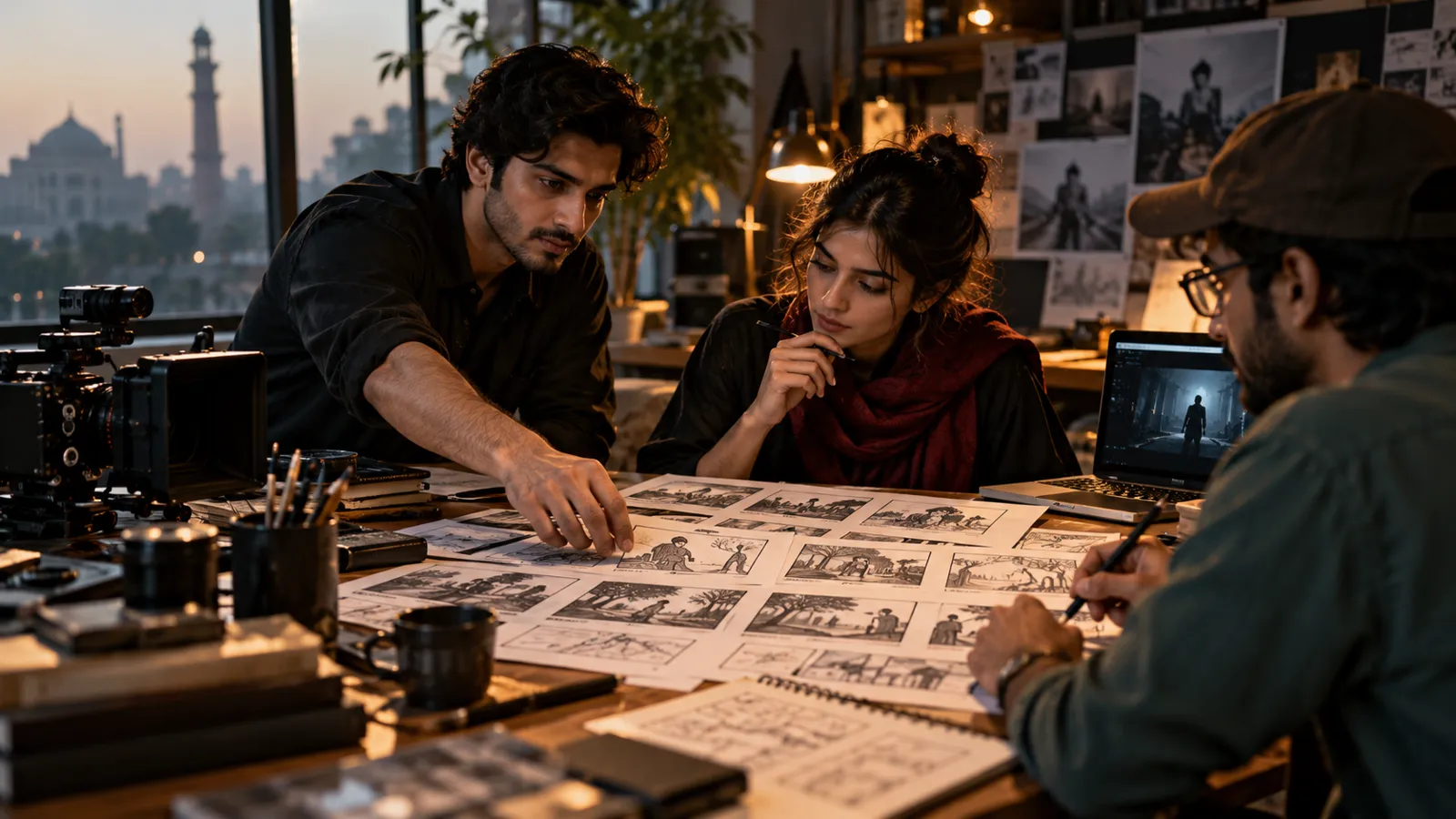
Break down the script for locations, props and changes that affect continuity. Agree what must be sourced, built, borrowed or adapted, and understand the available budget and permissions. Photographs and clear notes help preserve arrangements across shooting days. L2H’s proposed craft framework places design in conversation with storytelling and production, encouraging choices that are expressive, achievable and consistent with the needs of the scene.
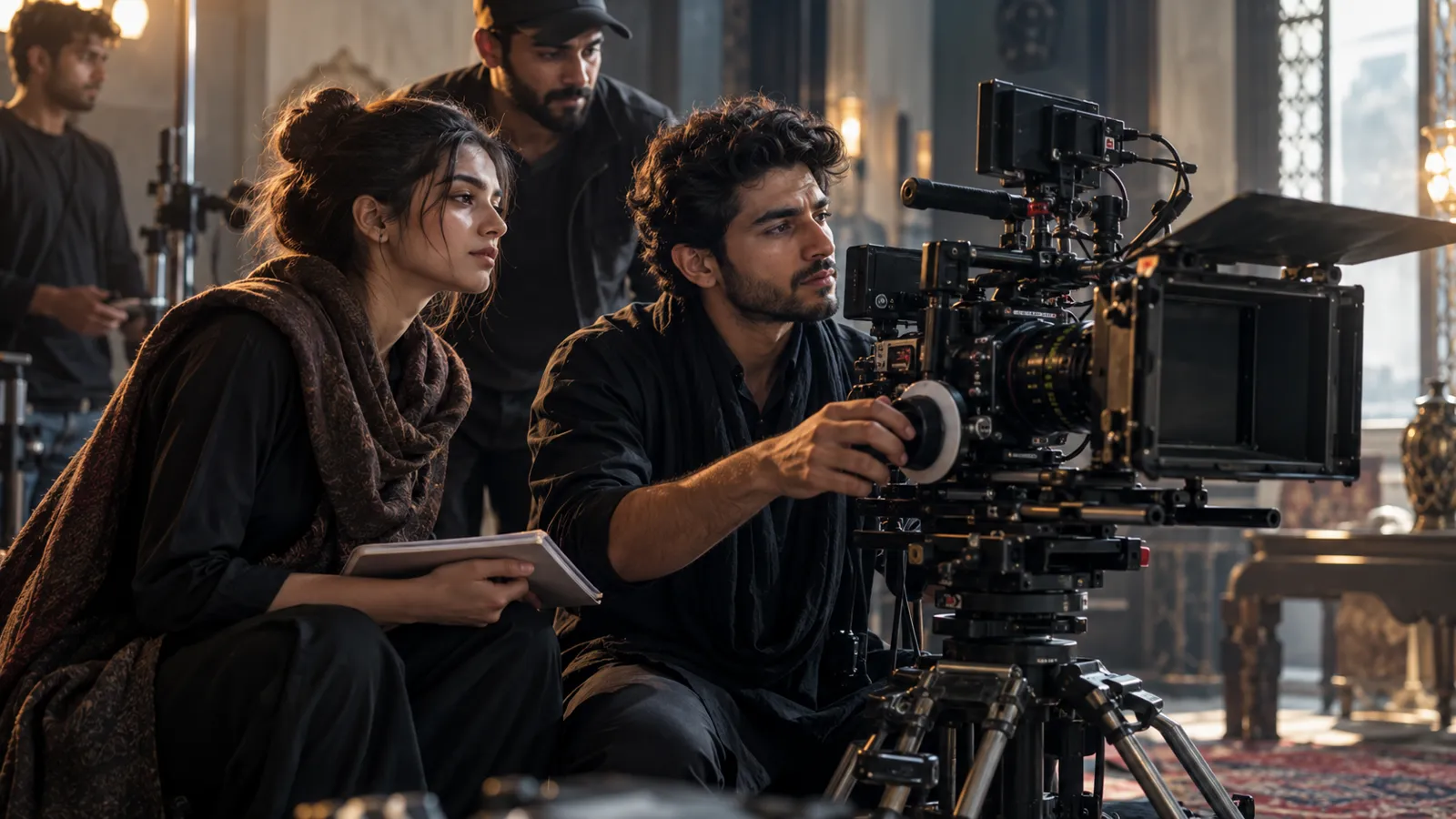
Photograph a dressed space from the planned camera position rather than judging it only while standing inside the room. The image will show which details actually communicate and which objects disappear, compete or create unintended associations.