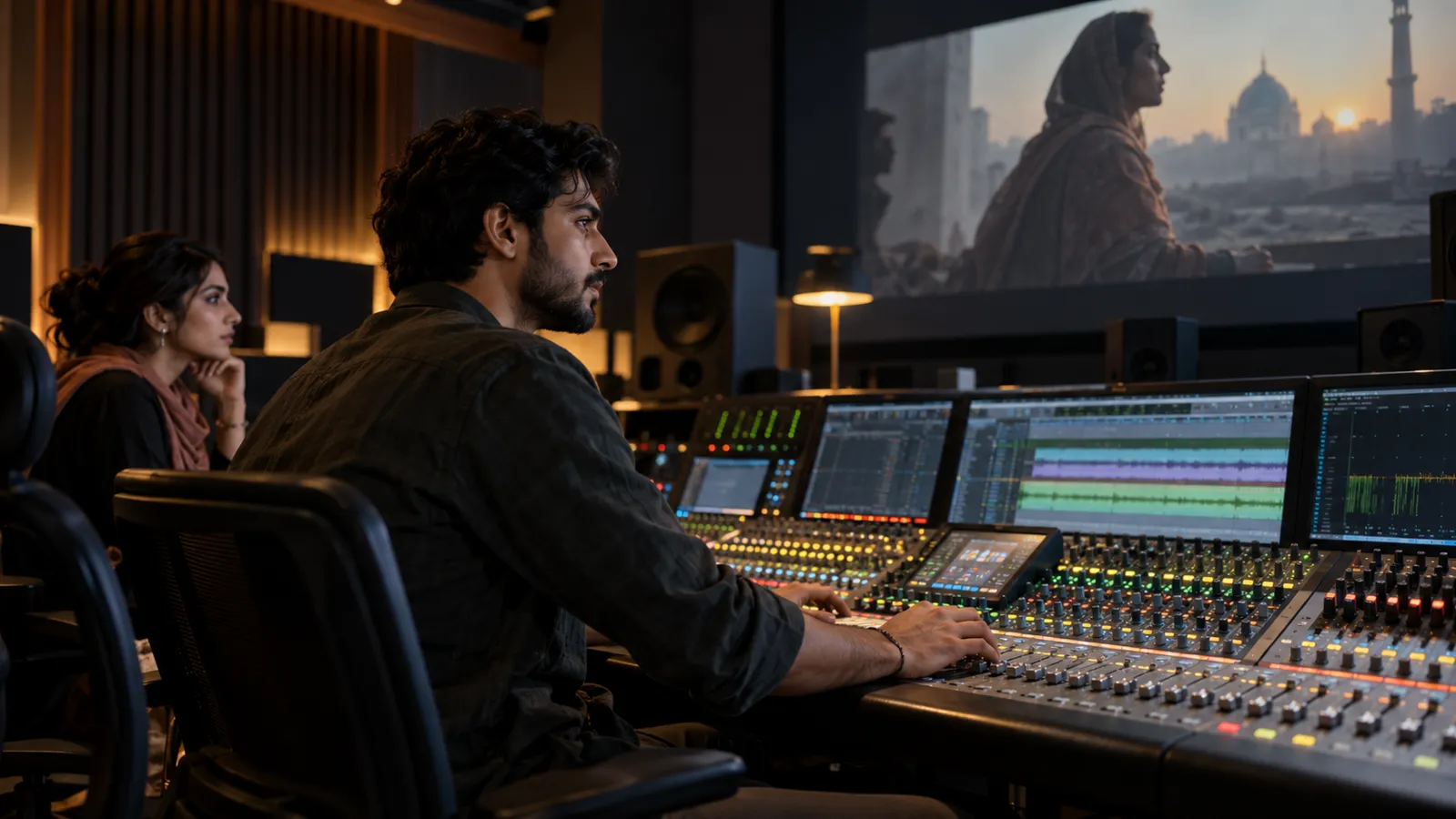
01 / The process / Post-production
Create an organized starting point
Post-production begins with reliable handling of the recorded material. Files should be identified, checked and stored through an agreed process, with project versions that collaborators can understand. Camera and sound notes help connect the material with production decisions. Organization is not separate from creativity: it makes it easier to find a performance, compare a version and recover the thinking behind an earlier choice.
02 / The process / Post-production
Sequence the work deliberately
Editing, sound and music can develop in conversation, but major picture changes affect later stages. A team should agree when a sequence is ready for particular kinds of finishing and how revisions will be communicated. Reference exports, clear notes and consistent naming reduce confusion. Reviewing the film as a whole helps ensure that each department’s work supports the same experience.
03 / The process / Post-production
Check what the audience will receive
The final export needs its own review for picture, sound, titles, subtitles and unintended technical problems. Delivery requirements depend on the intended platform or screening. Keep an identifiable approved version and the material needed for future authorized changes. L2H’s proposed post-production learning connects the practical workflow with critical viewing, helping participants understand that the film is not complete simply because the editing timeline can play from beginning to end.
Create a simple handover checklist that identifies the current picture version, accompanying audio and any unresolved issues. The receiving collaborator should be able to understand the material without relying on a long chain of informal messages.